
Ford Mach-e
Evolving a 3D concept into a configurator worthy of the car.
As one of the world's leading legacy car manufacturers, Ford faces a significant challenge as its digital presence lags behind more agile competitors.
Their car configurator in particular suffers from corporate and regional misalignment, resulting in an inconsistent and unreliable user experience. Simply put: Ford's configurator didn't match the quality of the electric range.
Incorporate UX principles and behavioural science to transform an innovative 3D concept into an immersive, accessible, and industry-leading car configurator.
Owning the UX & content workstream, alongside —
Christian Cornwell — UI
Lee Hefron — Motion Design
User & industry research
Information architecture
Content strategy
CGI & motion collaboration
EU markets selected for rollout following senior client approval.
The original concept
01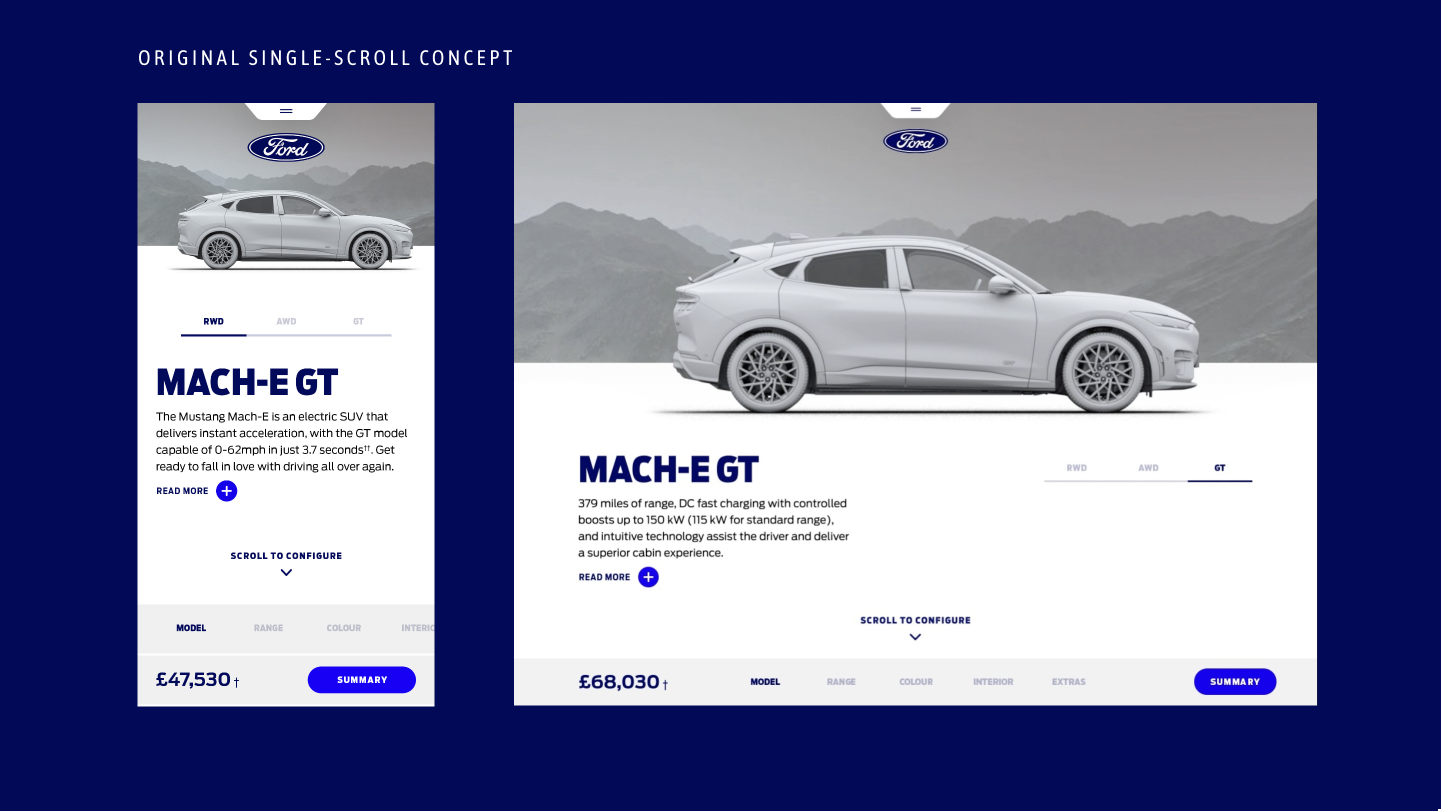
Process & findings
02The automotive industry is shifting focus from forecourts to eCommerce, and from limitless customisation to more restricted, cost-effective production. An underlying feature of electric vehicles is their inherent build simplicity compared to traditional combustion engines — requiring considerably fewer moving parts, their motors are more reliable with less potential for faults.
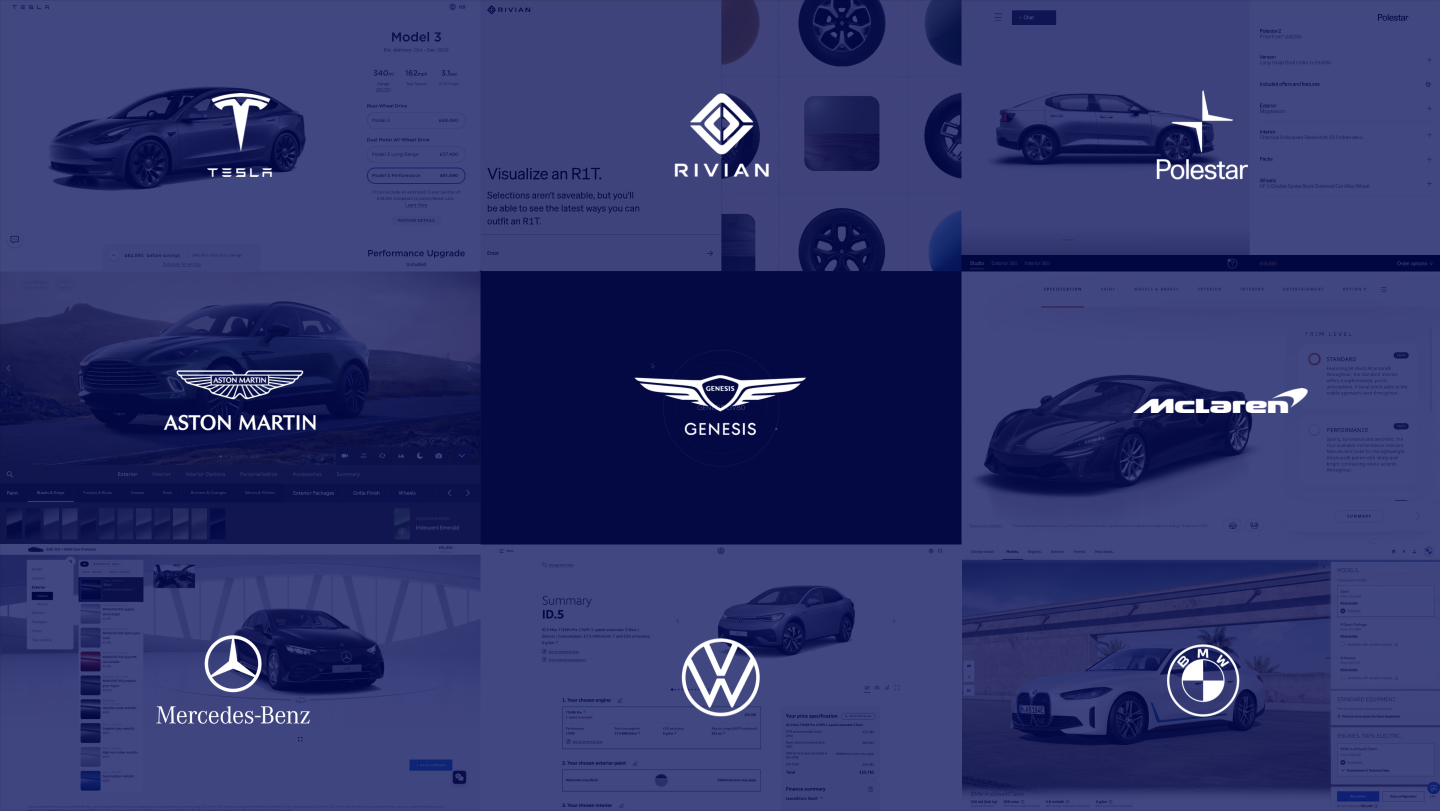
This efficiency is reflected in the digital experiences of industry innovators such as Tesla, Lotus, McLaren, and Polestar, who offer paired-back product configuration options that reduce cognitive load whilst encouraging sales.
Since the electric vehicle market is still in its infancy, Ford's target customers have a wide range of technical knowledge. Many of them require clear answers to make an informed decision to shift to full electric.
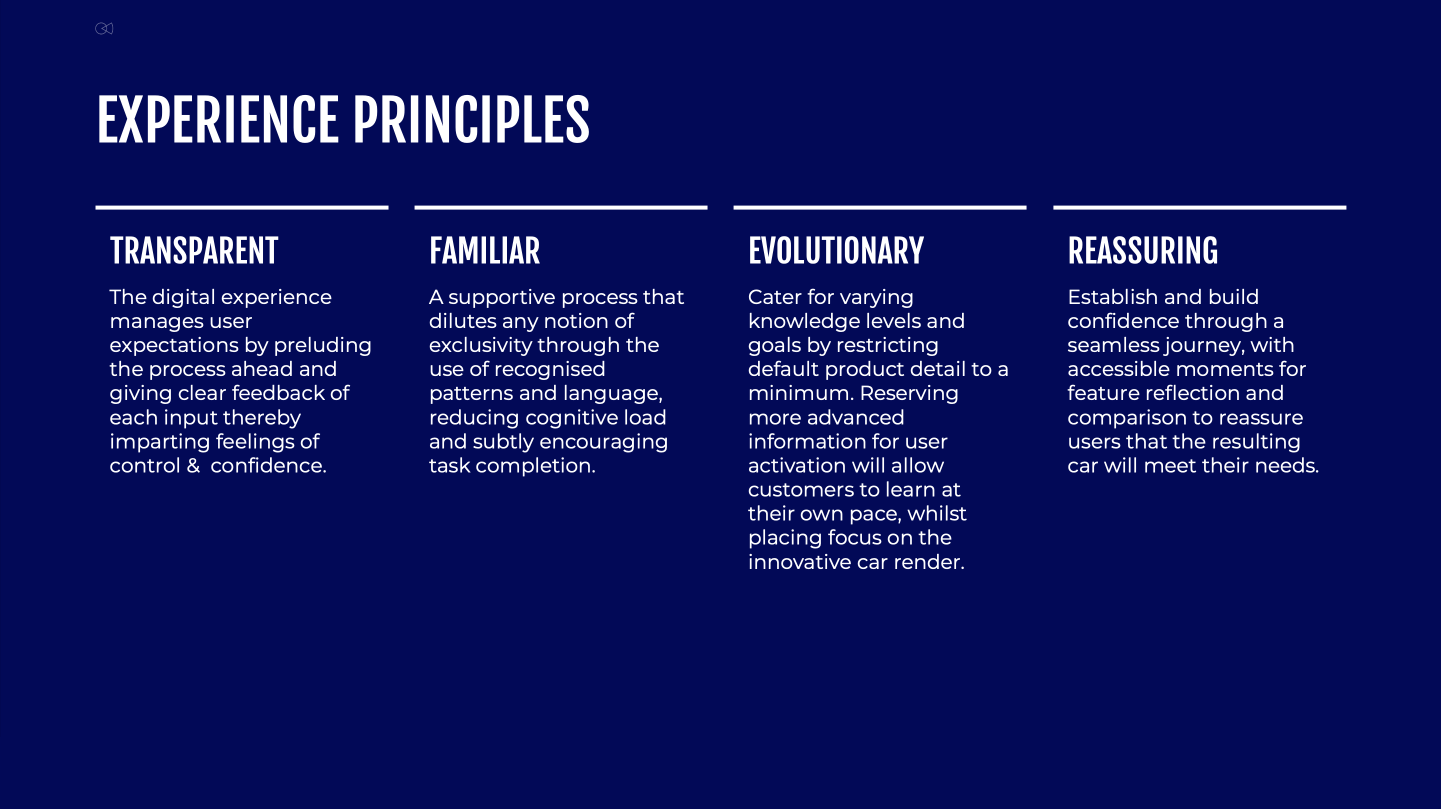
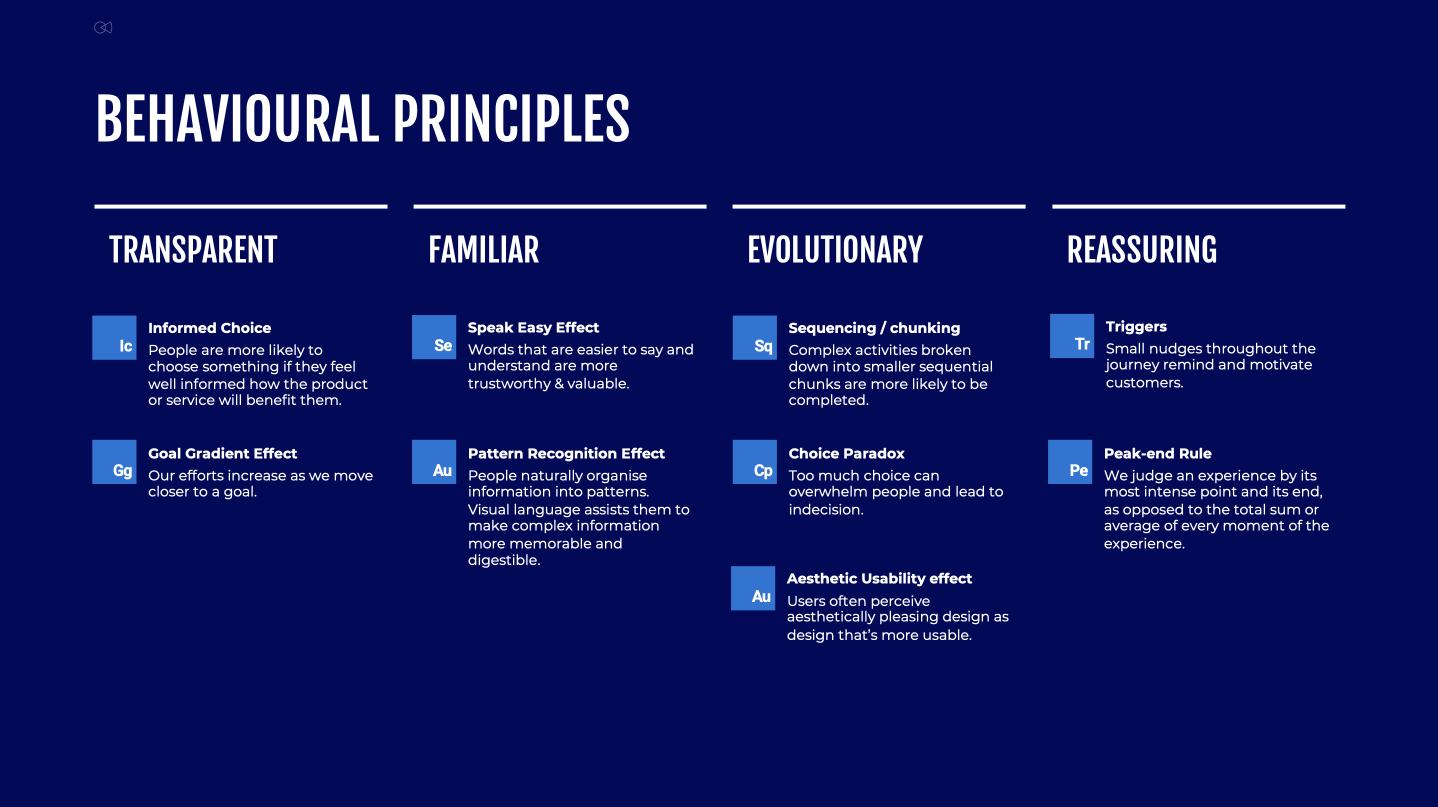
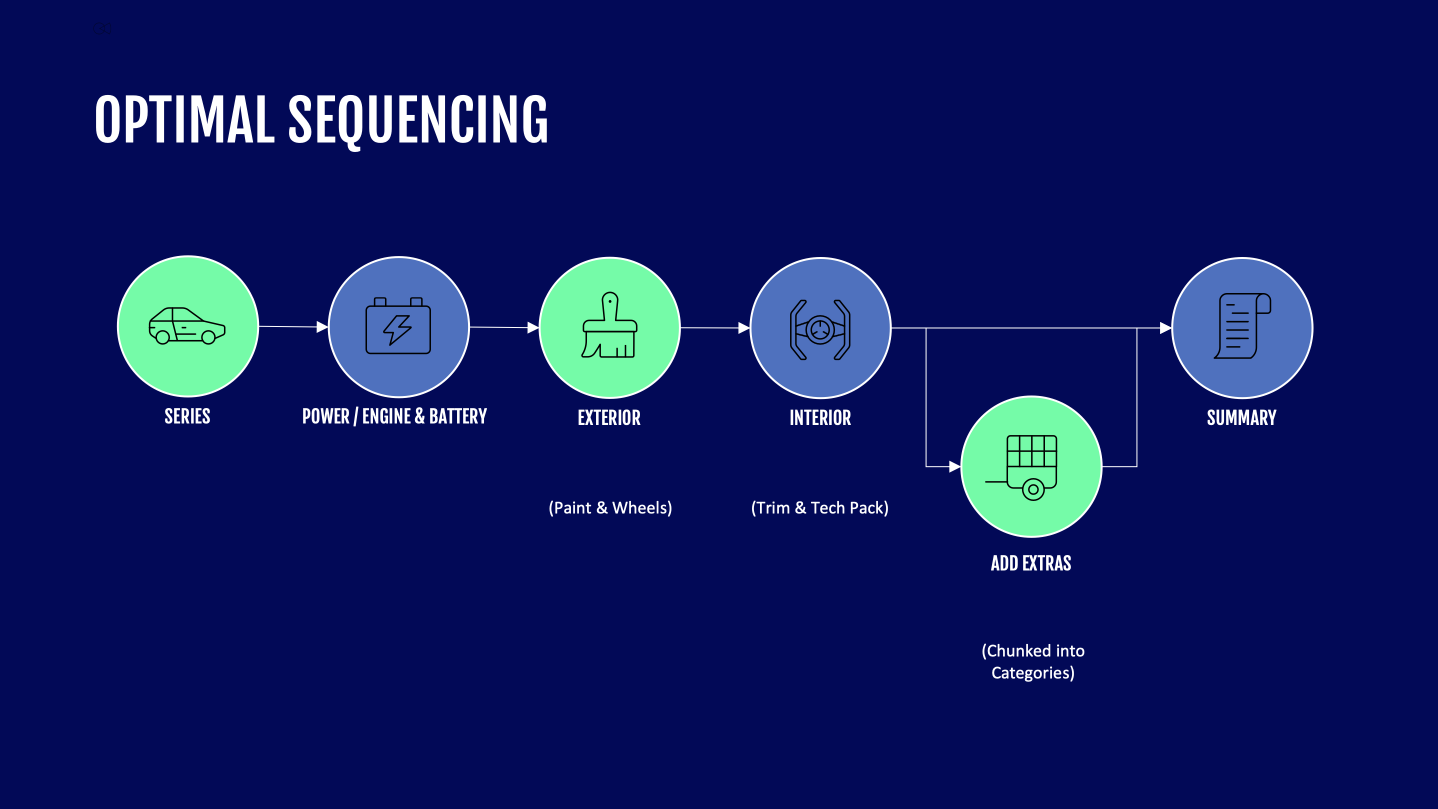
Condensing insights into three user profiles, a resulting set of experience and behavioural principles validated our design decisions and steered feature requirements, including the tool's optimal sequencing.
Design features
03A lite design system
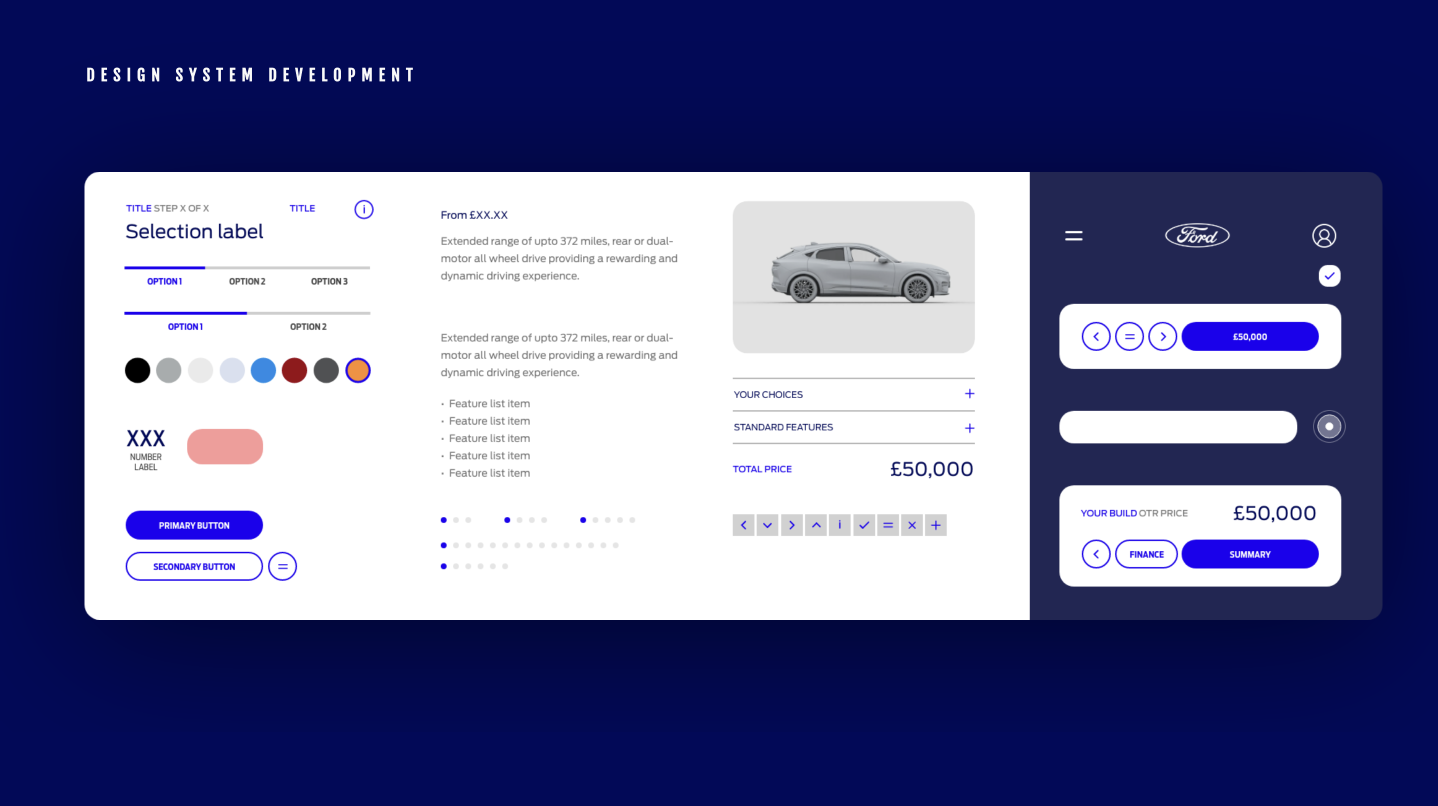
A lite design system in line with Ford's recently revised brand guidelines — enough structure to guarantee consistency without over-engineering a single-purpose tool.
Interactive 3D render
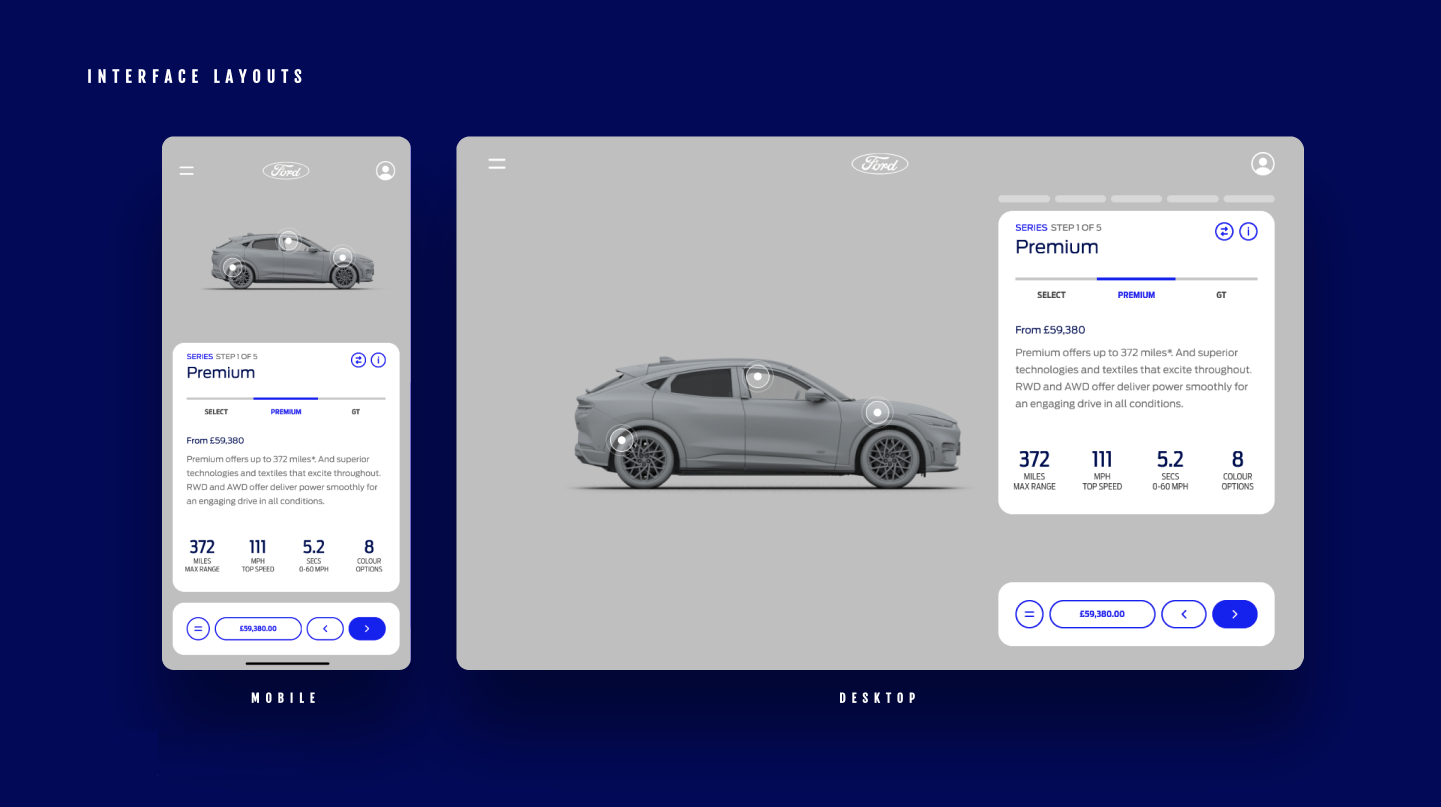
A 3D render of the vehicle, interactive on scroll or via the control panel, as the user navigates through the configurator sequence.
Dynamic configuration cards
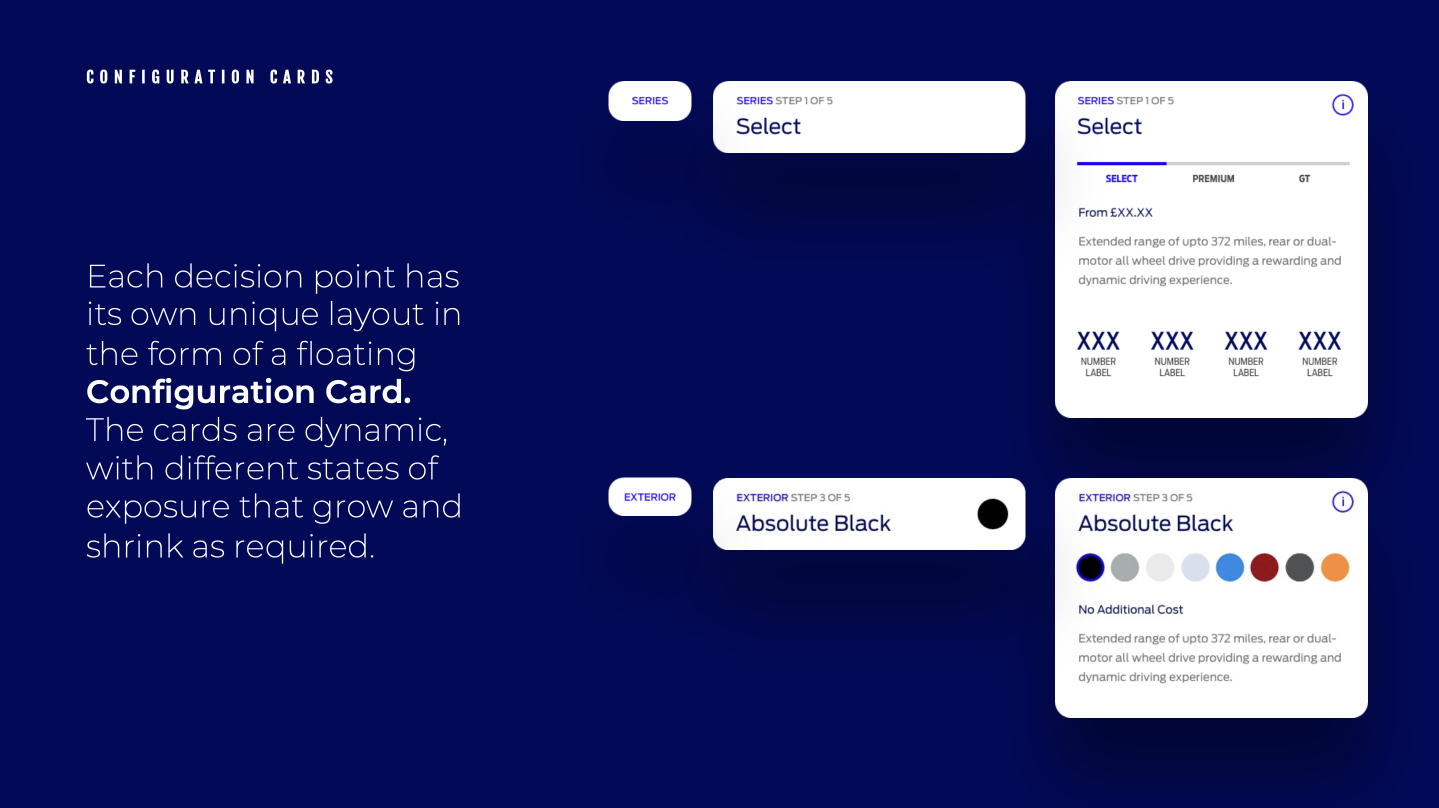
Dynamic configuration cards bank to the top of the screen once a step is completed. Each decision point has its own unique layout as a floating Configuration Card, with different states of exposure that grow and shrink as required.
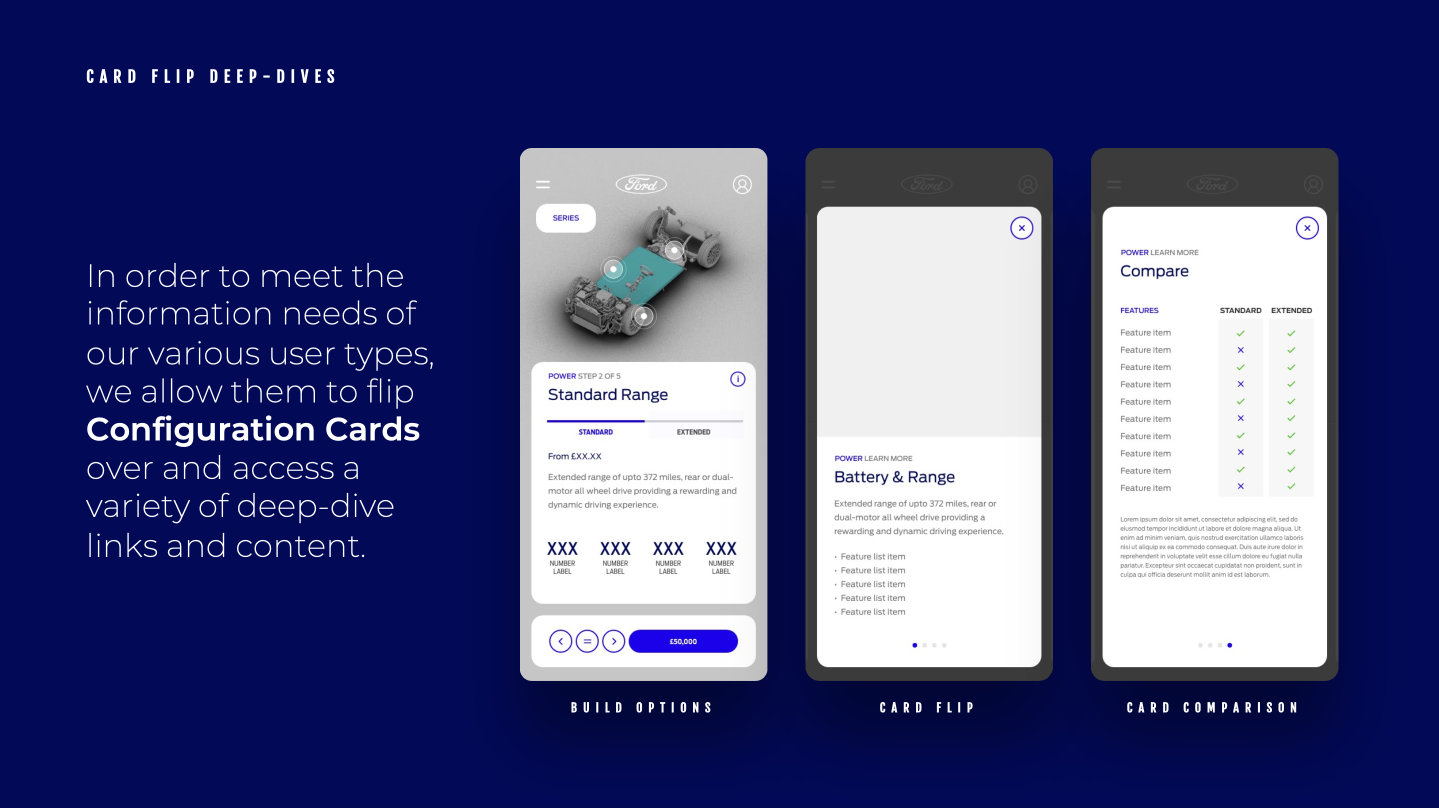
Card-flip deep-dives
Card-flip deep-dives housing additional technical product information. To meet the information needs of our various user types, we let them flip Configuration Cards over to access a variety of deep-dive links and content.
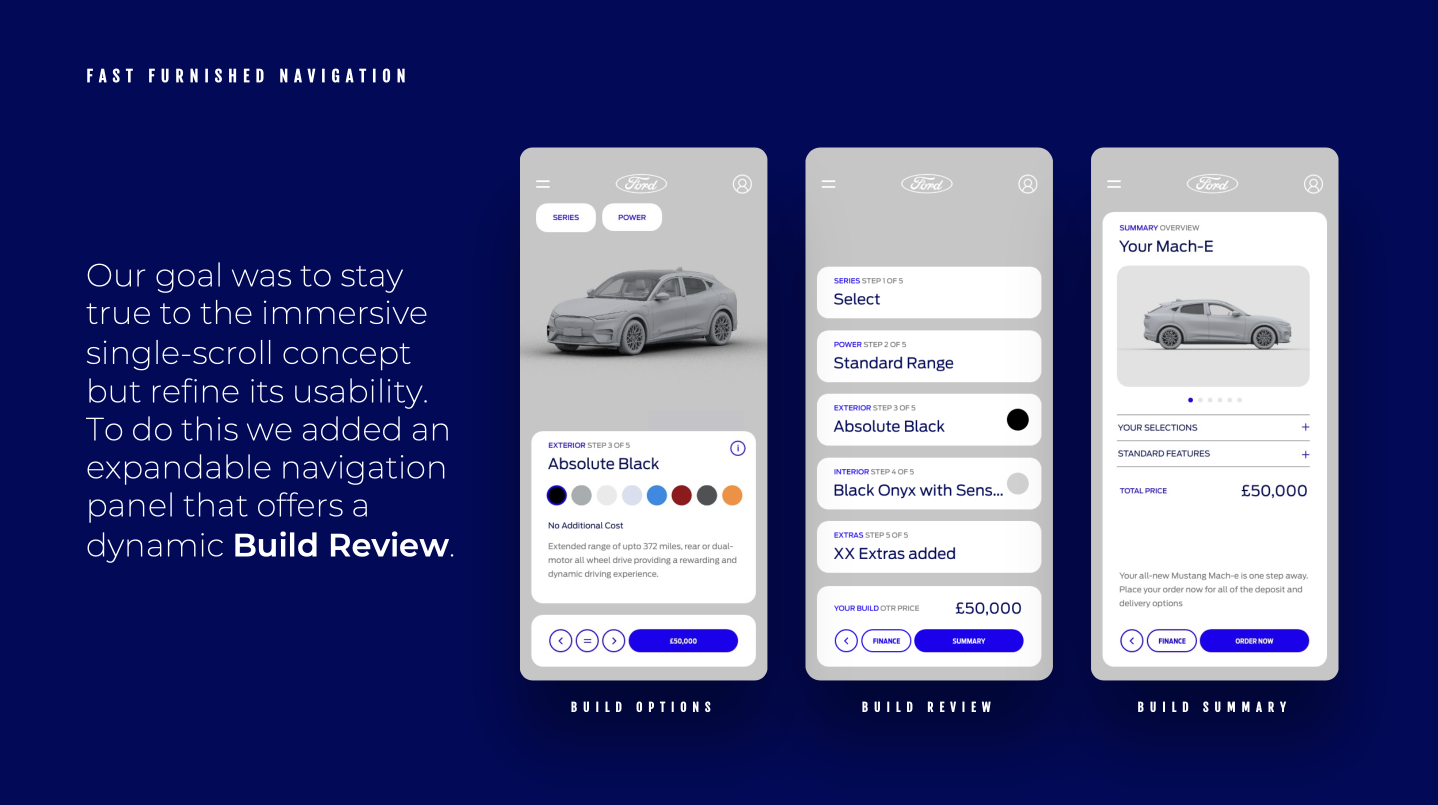
Build review
A review of selected items, plus the full build summary, accessible throughout the experience. Staying true to the immersive single-scroll concept, we added an expandable navigation panel offering a dynamic Build Review.
Outcomes
04The design was approved by Ford's senior client team and selected for rollout across seven EU markets. Working alongside Ford's technology partners, we recommended a 2D pre-rendered engine over WebGL — a decision driven by performance consistency across markets rather than visual ambition alone.