
Kaluza
Scaling design leadership to accelerate the energy transition.

Kaluza is an engineering-first business operating at pace in a complex, regulated industry. When I joined, product design was undervalued and structurally disconnected from delivery.
I worked to change that — embedding design thinking into the delivery process, building the foundations for a scalable practice, and hiring a local team in Australia who became the recognised UX/UI authority across multiple clients. When I relocated back to London, I promoted my first Australian hire as my backfill. He now leads the local team independently.
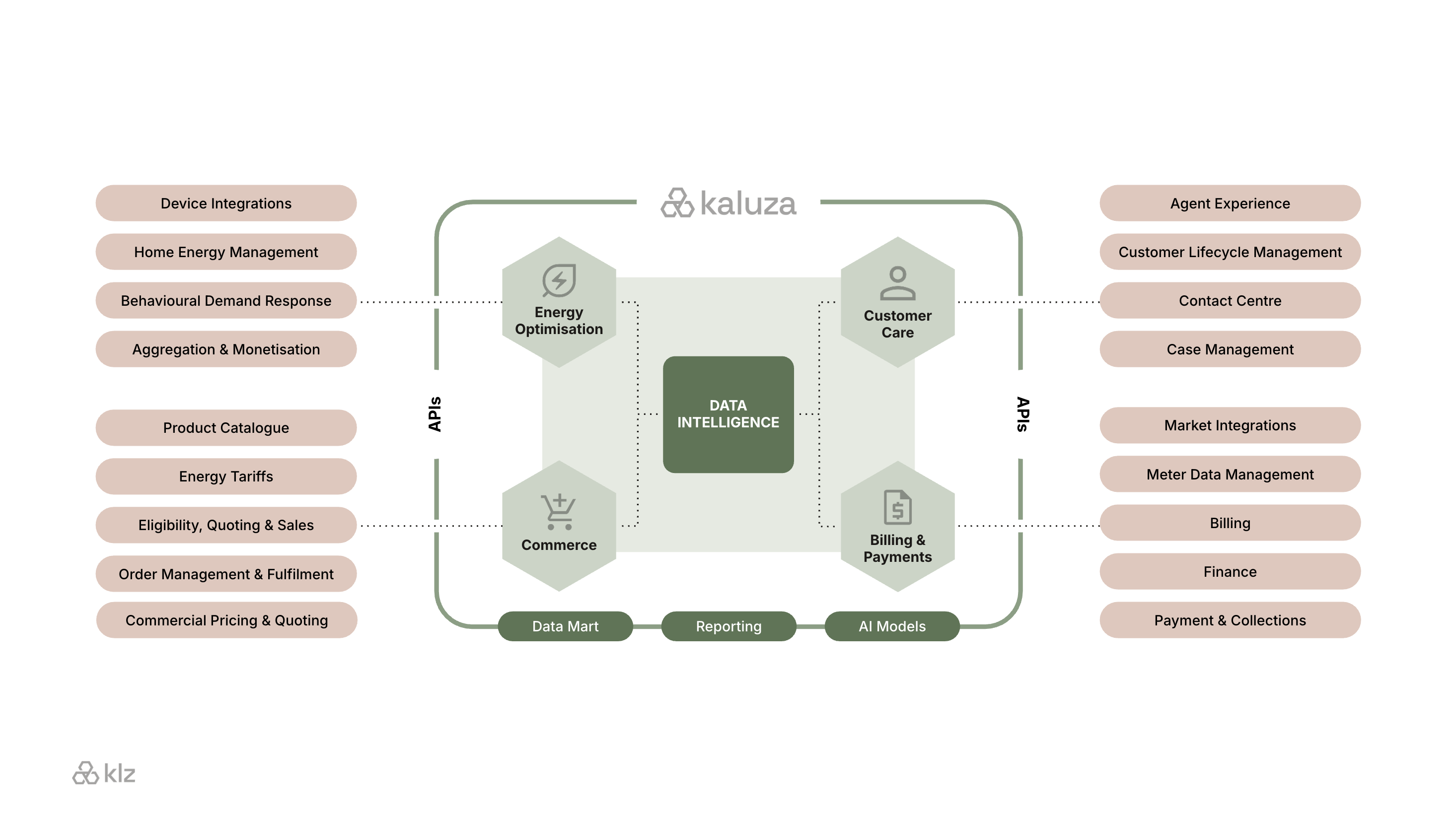
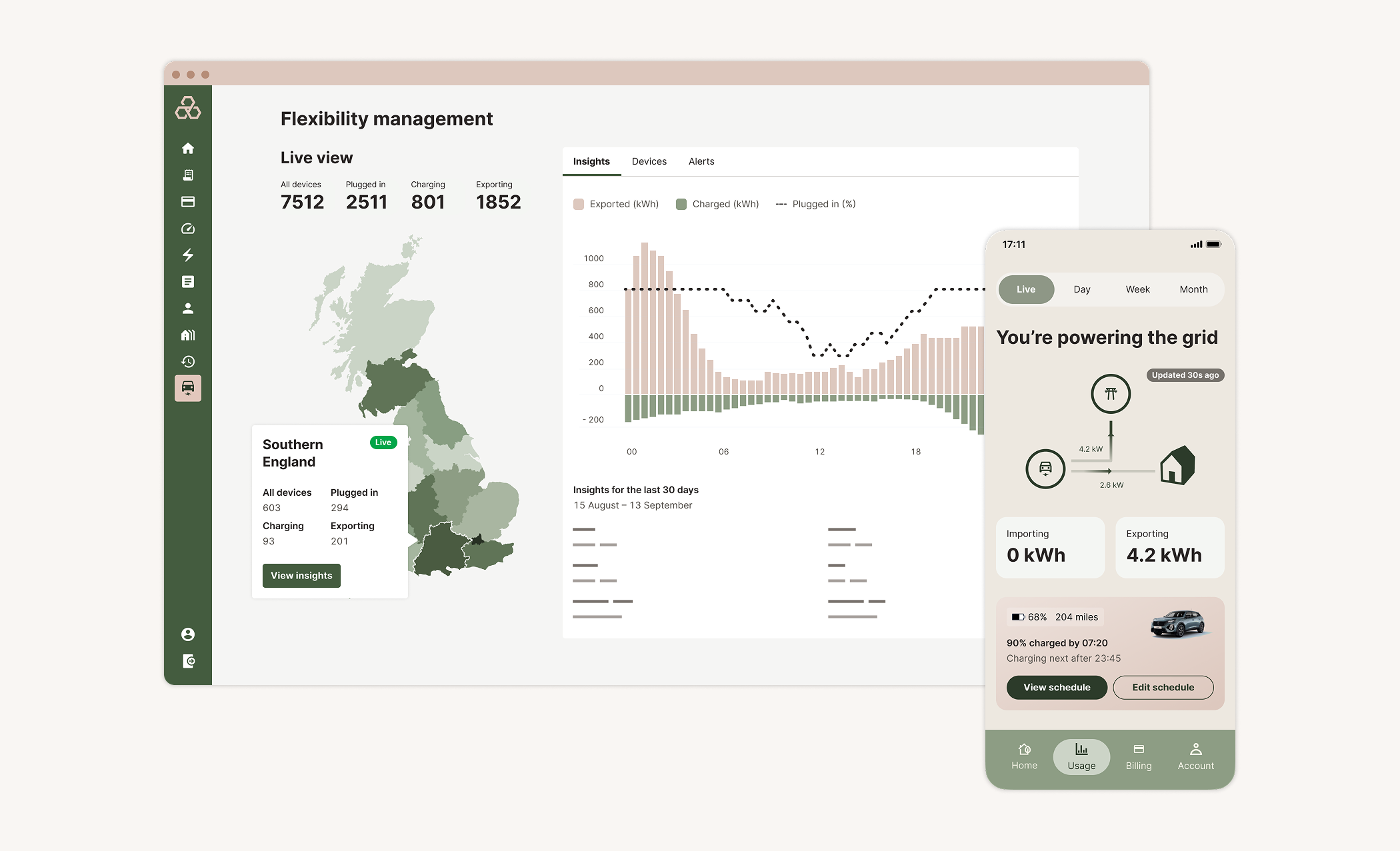
Kaluza's energy intelligence platform turns complexity into growth opportunity, enabling trusted leaders like Engie, AGL, and Mitsubishi to shape a cleaner, smarter energy system — powering the infrastructure behind millions of energy customers worldwide.
Scaled the Australian design team from one to five in the first twelve months.
KAE features shipped across the June 2026 client releases.
Client initiatives spanning three markets and three retail energy clients.
Leadership
01Joining as the first designer on the ground in Melbourne, I led the hiring process and scaled the local team to five designers over my first twelve months — prioritising people comfortable with complexity, pragmatic with stakeholders, and eager to develop their practice with emerging tooling.
We established a weekly design clinic — initially for the team, later opened to the wider business — creating a regular space for skill sharing, peer critique, and broadcasting design's work to colleagues who rarely saw it. By the time I relocated, the Australian team were the recognised voice of authority on UX and UI across multiple clients, embedded deeply in cross-functional delivery.
Succession was deliberate. I put my first Australian hire forward for promotion as my backfill. He now leads the local team in close collaboration with leads across Europe. Back in London, I took on management of a further five designers — supporting development, protecting time for upskilling, and running annual reviews against agreed goals.
The challenge
02Design maturity
Limited product design maturity, inconsistent file hygiene, and a diminishing designer-to-engineer ratio created a fragile foundation. Aggressive delivery deadlines left little space for craft, and restricted access to end users made research-led design difficult to advocate for.
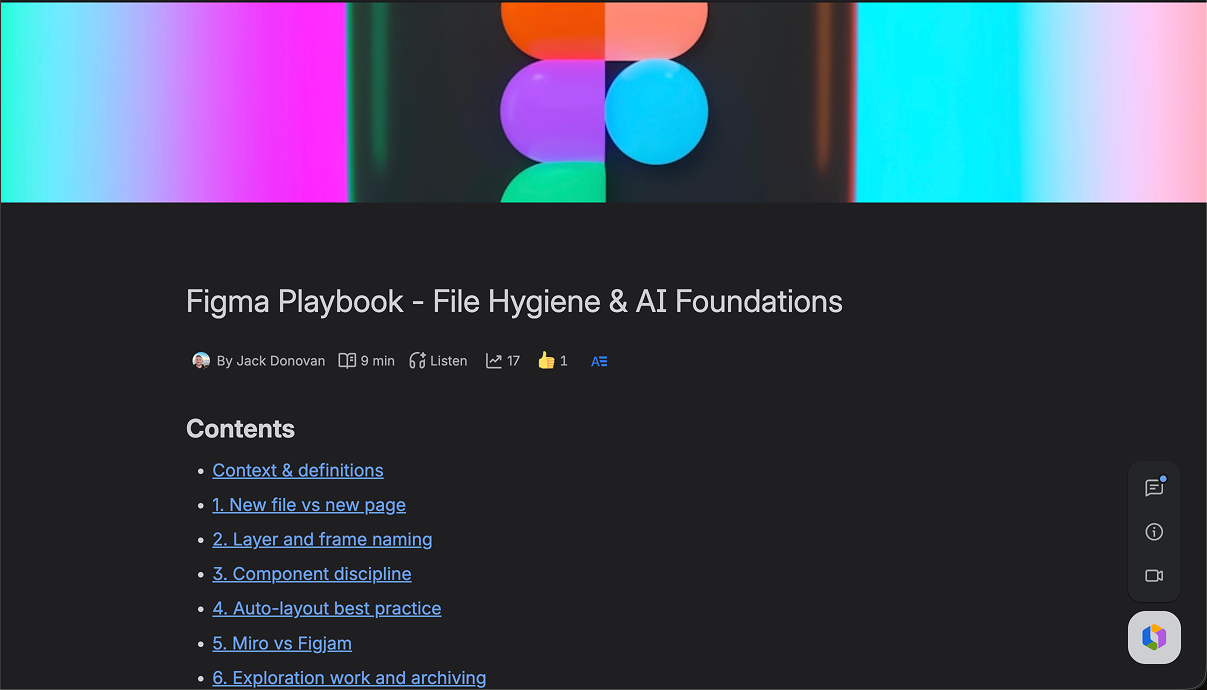
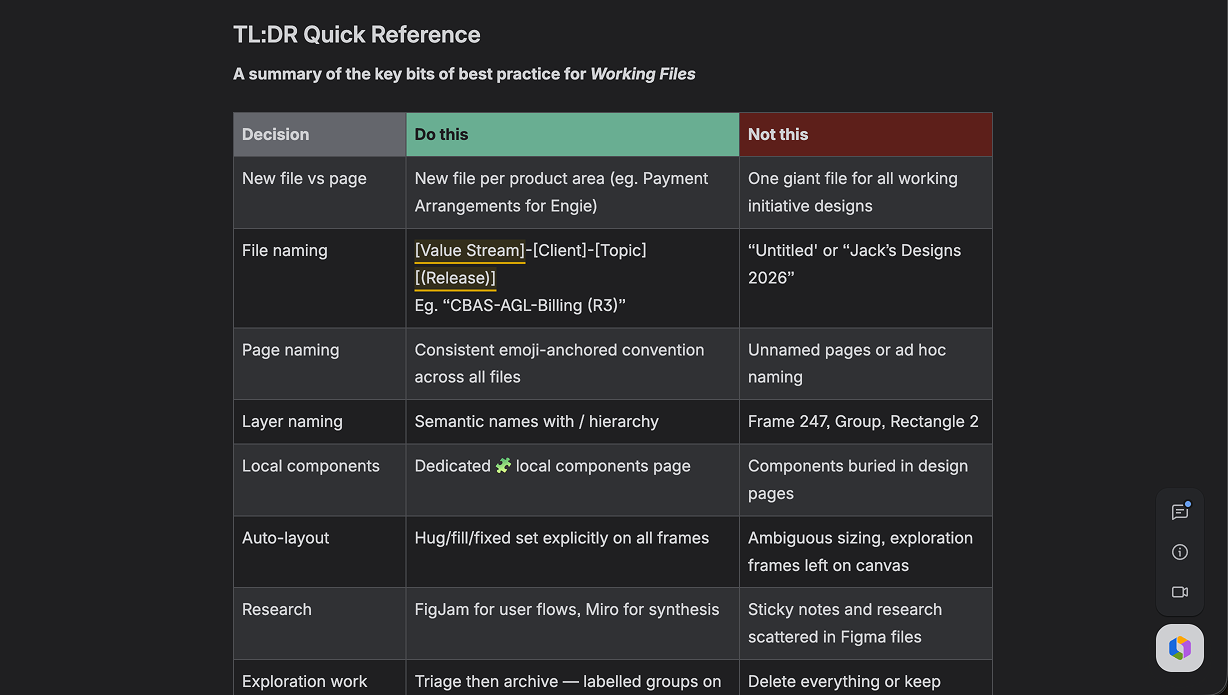
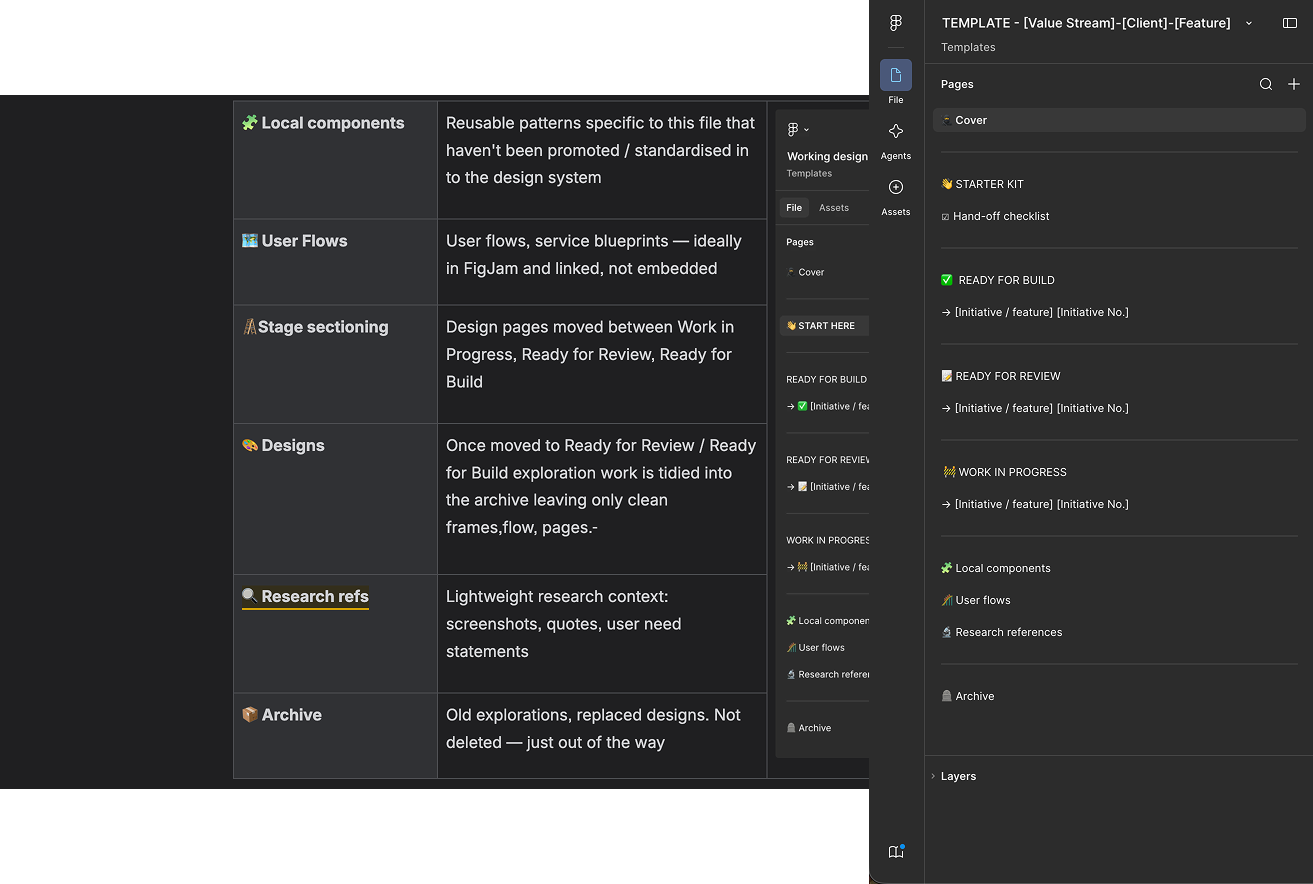
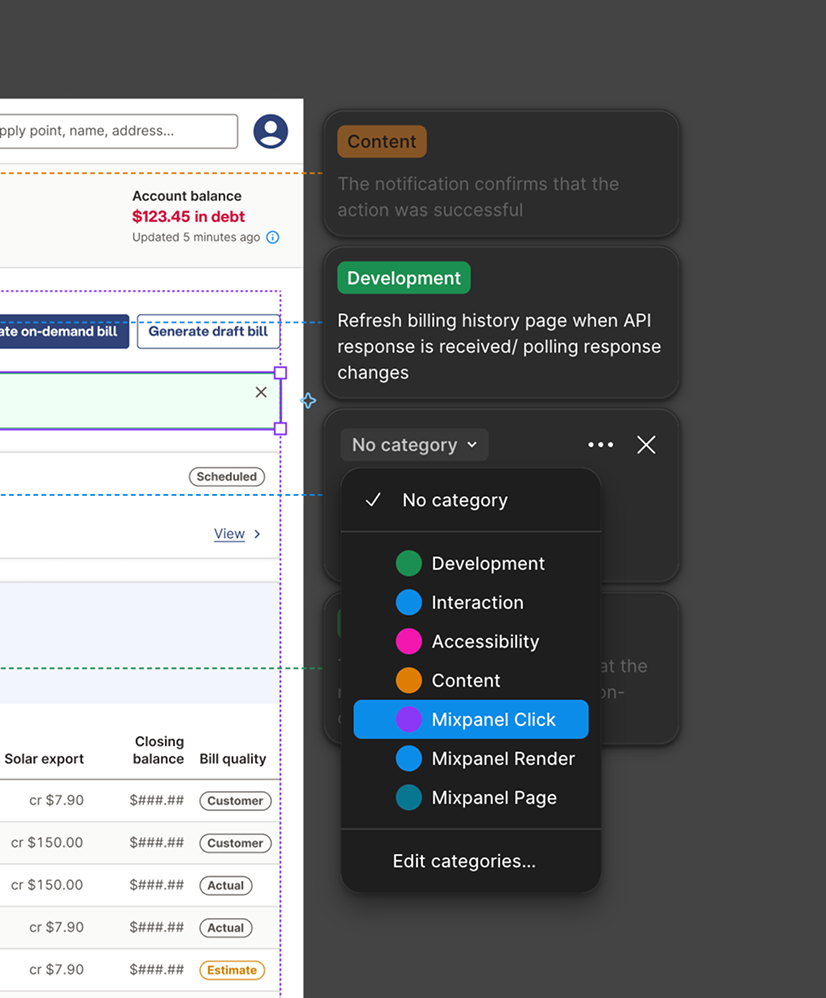
I restructured the enterprise Figma instance, then defined and published a hygiene and AI foundations playbook establishing clear standards for engineer handoff and LLM output quality. It's since been adopted globally, with Lead Designers using it to assess work before build. Its component conventions now feed directly into the design system roadmap. I also ran a programme of design dojo sessions to raise UI craft and create a shared quality standard across the team.
Team structure
Designers embedded in siloed value stream trios lacked cross-team collaboration, resulting in inconsistent UX, disparate processes, and limited end-to-end product ownership.
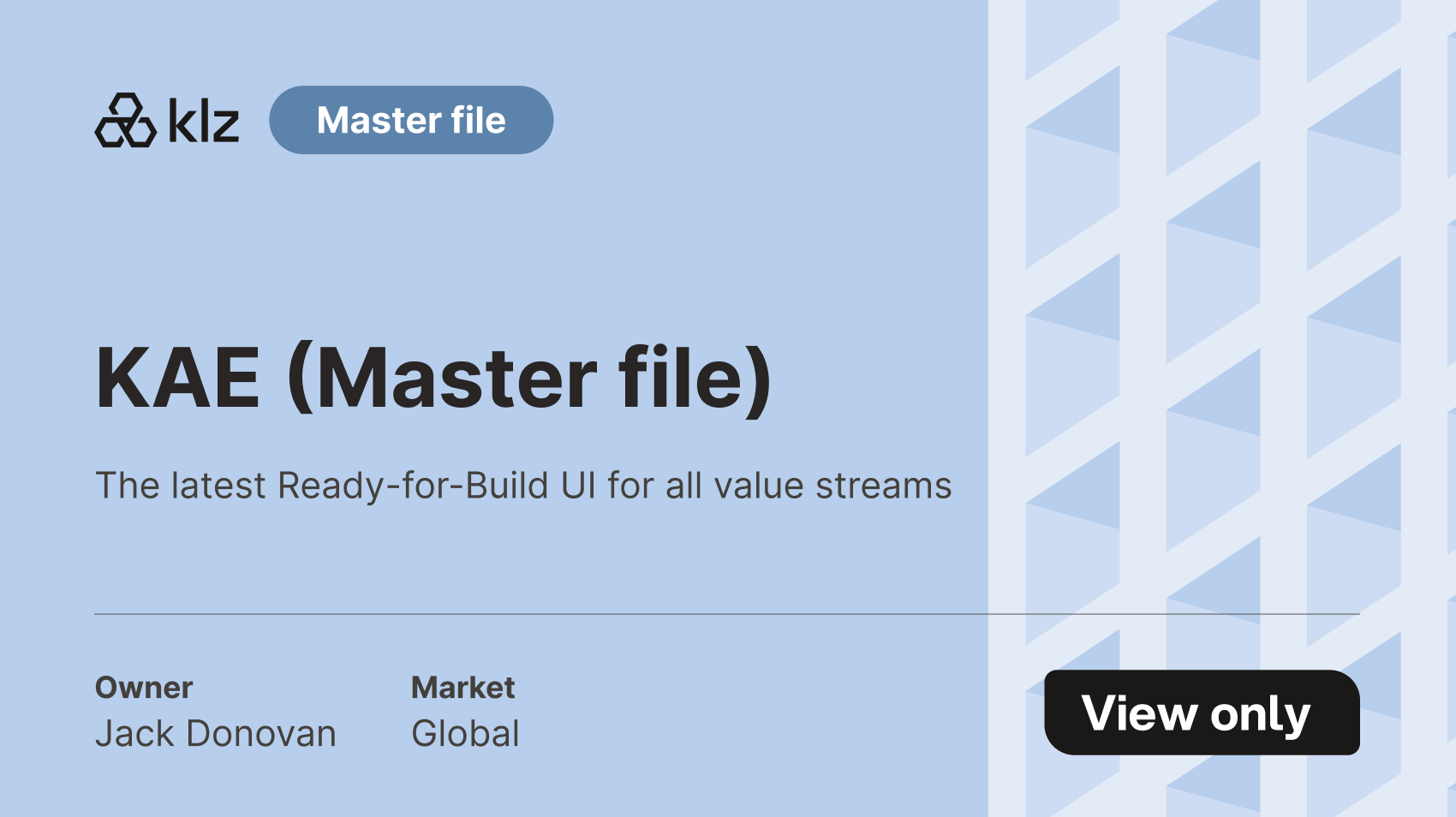
I coordinated the creation of a master file housing all client initiative designs in a single canvas — governed by a Lead Designer sign-off mechanism before work was added. It became the team's primary tool for auditing bottlenecks and identifying future release opportunities. I also introduced connected Figma files for direct client collaboration, surfacing cross-platform usability concerns early.
Delivery at scale
The fundamental tension was persistent: ship the required functionality by the deadline, or take the time to refine an experience that adhered to design system guidelines. In an engineering-first culture, the former won by default — until design had the credibility to push back.
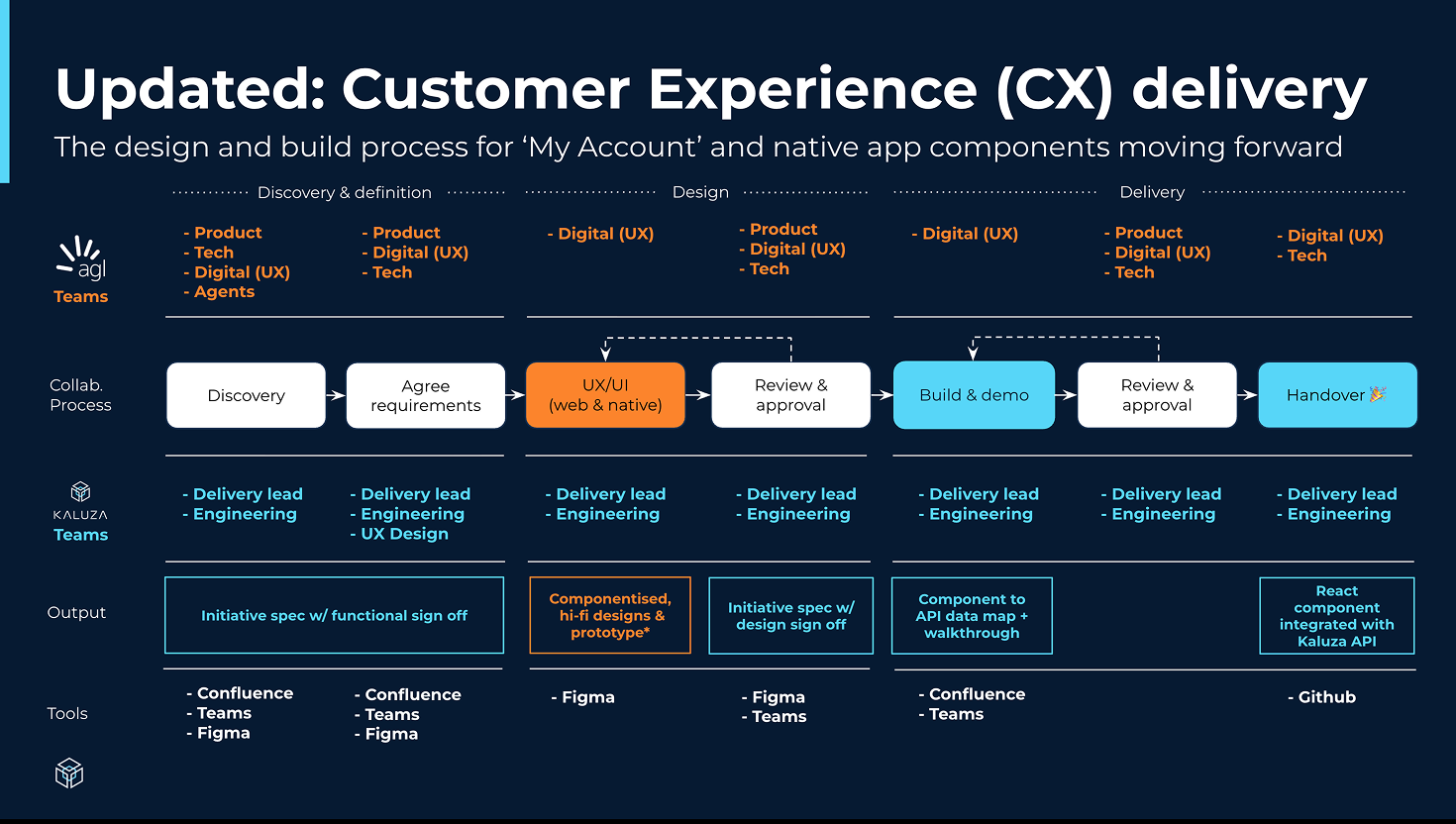
I championed weekly crits to shift the team's thinking from feature-level execution to platform-level consideration. I also defined and installed an iterative, agile delivery process for white-labelled AGL customer experience components, presenting it to over 100 client stakeholders.
Midway through, the business began rolling out an evolved brand identity — a live, moving target layered onto global UI delivery already running at pace. Our design team had to absorb a new visual foundation and stage the design system uplift in increments, mitigating the front-end and back-end impact that could otherwise stall committed release deadlines.
From standards to shipped work
03The real measure of the practice wasn't what I designed — it was what the team could ship without me in the room. Payments and billing, one of the most sensitive and heavily-regulated areas of the agent experience, became that test.
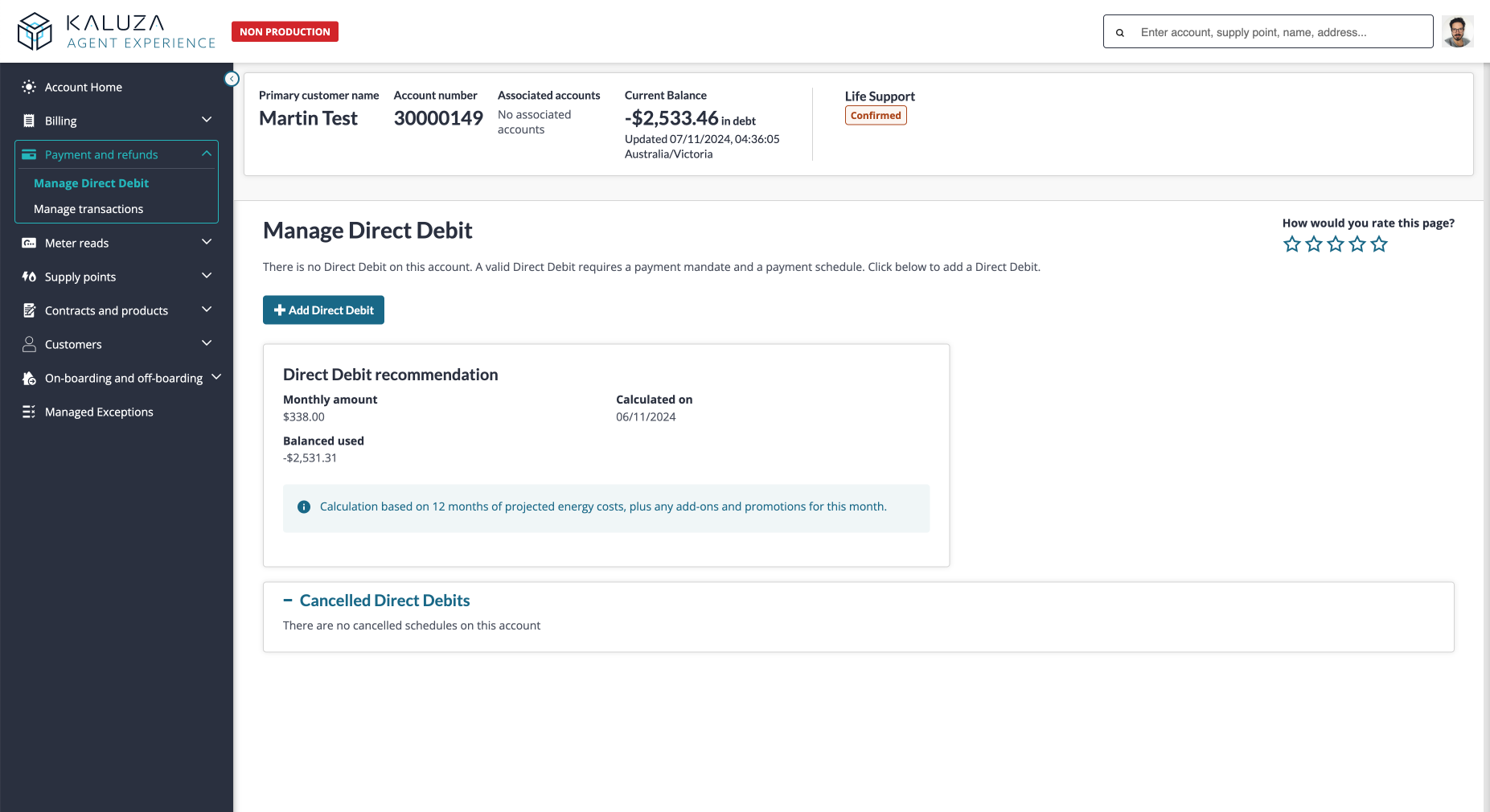
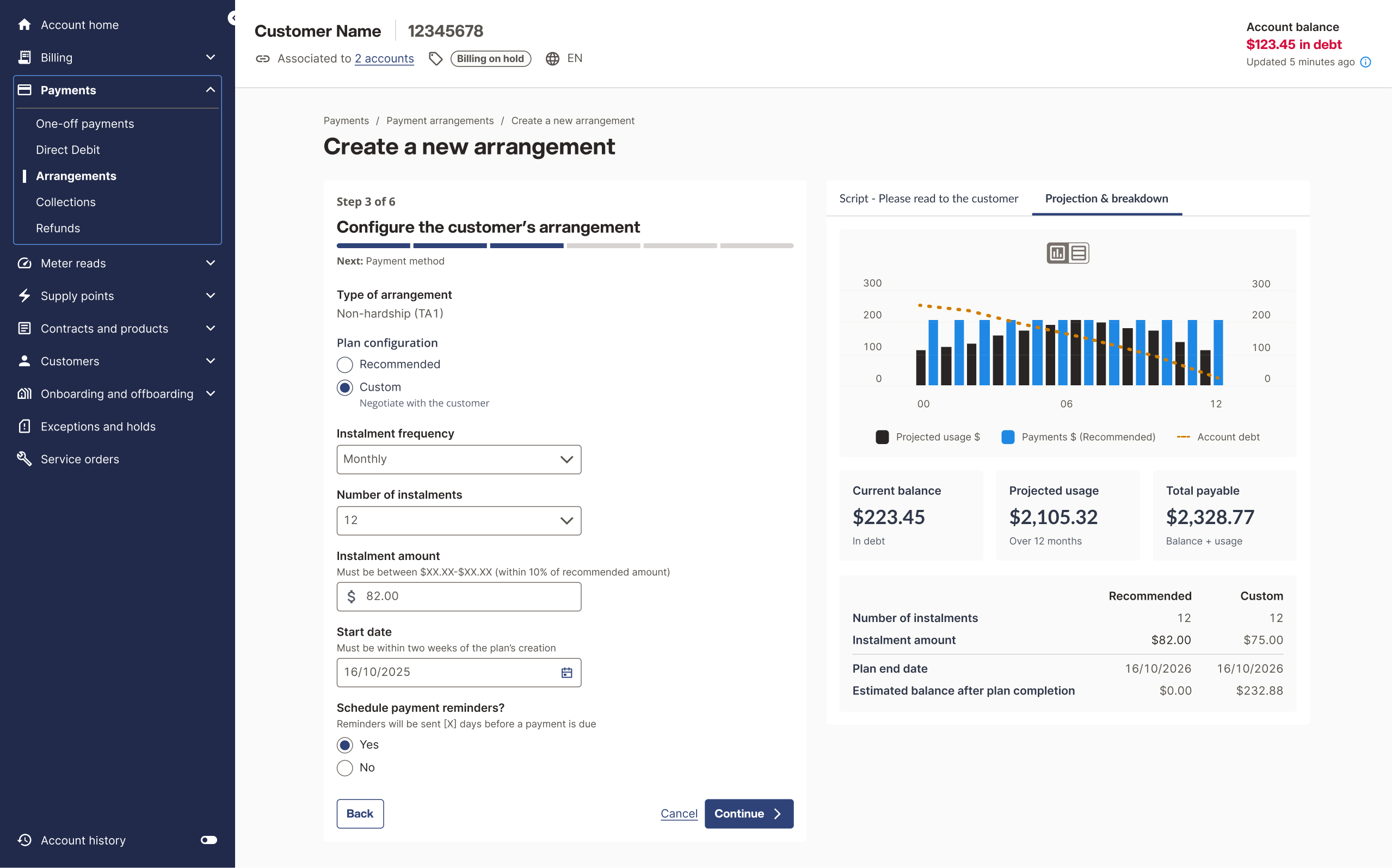
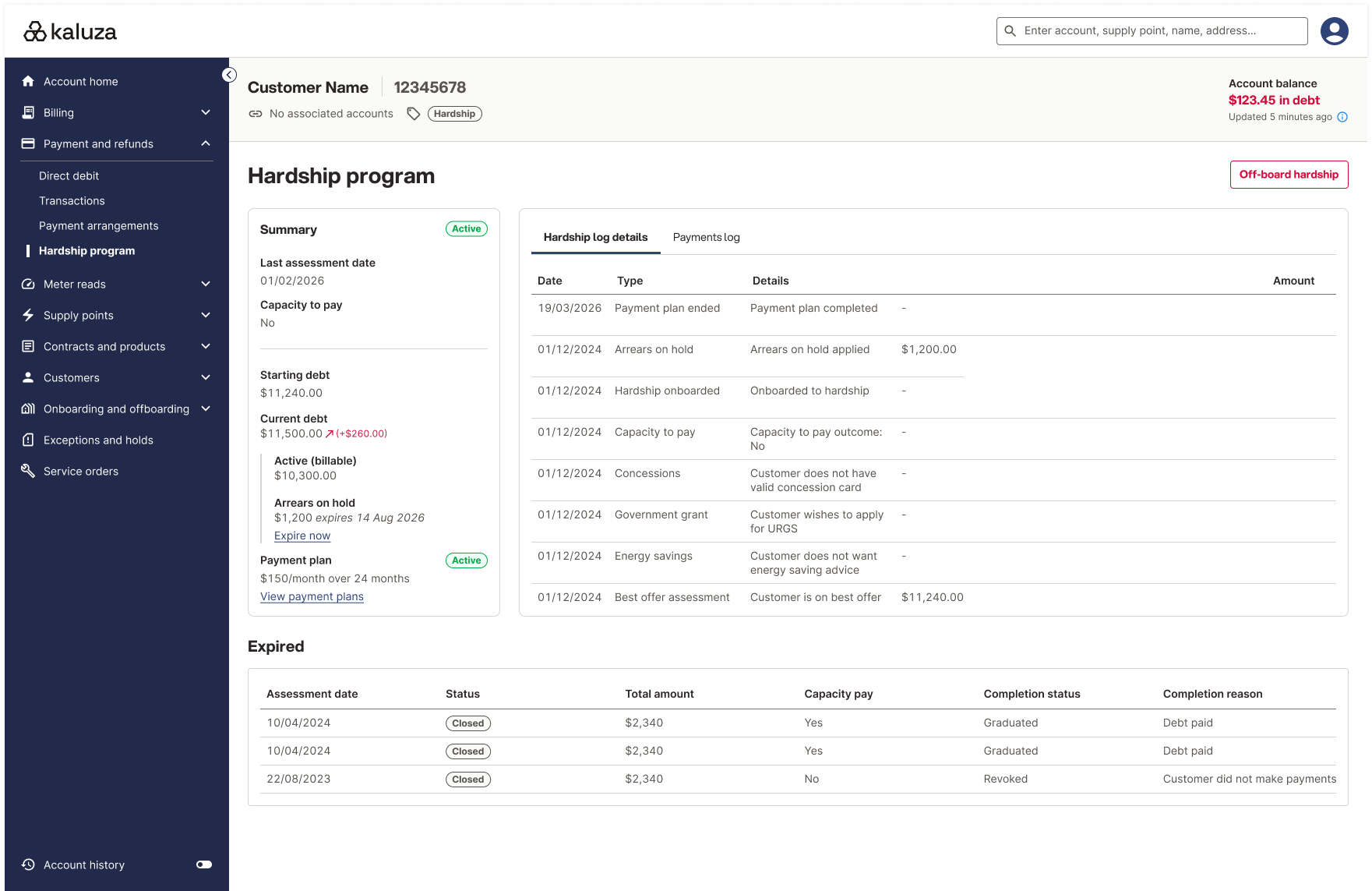
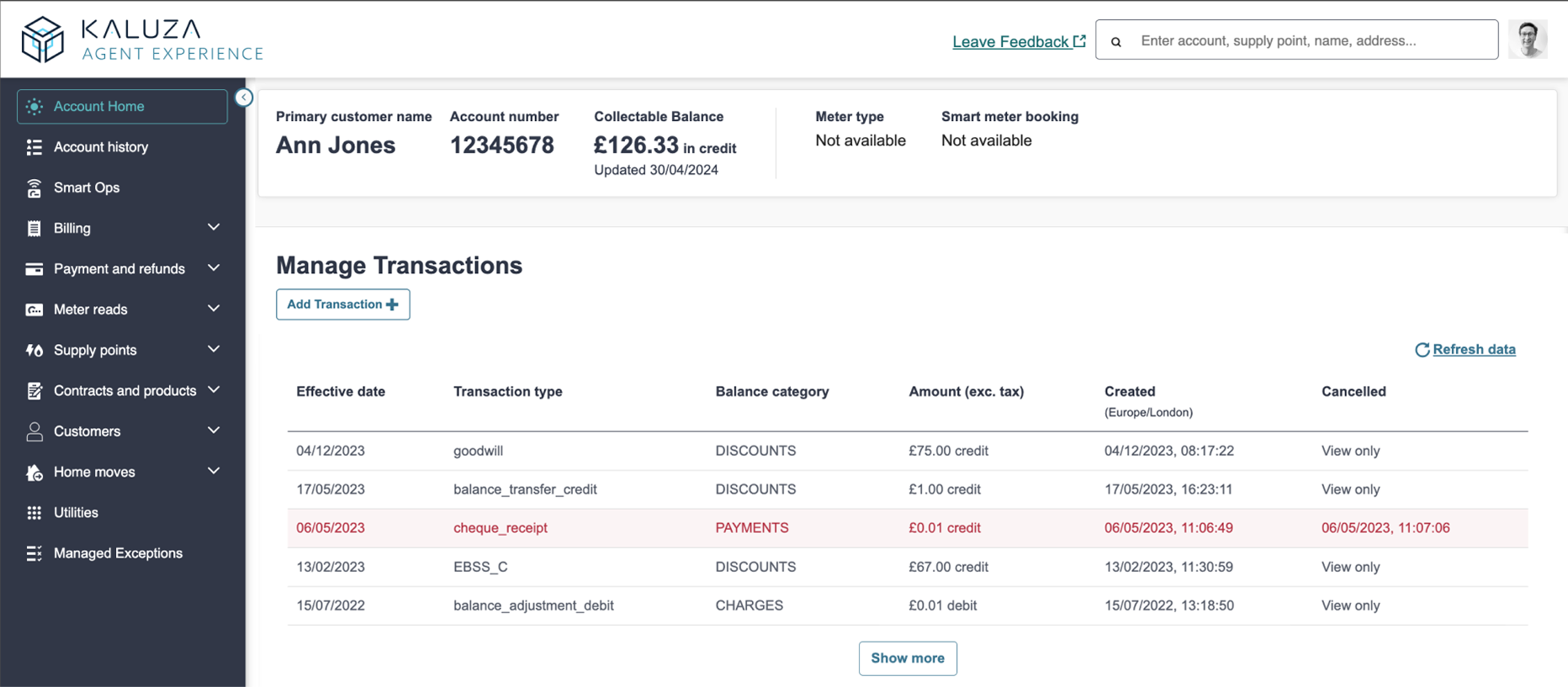
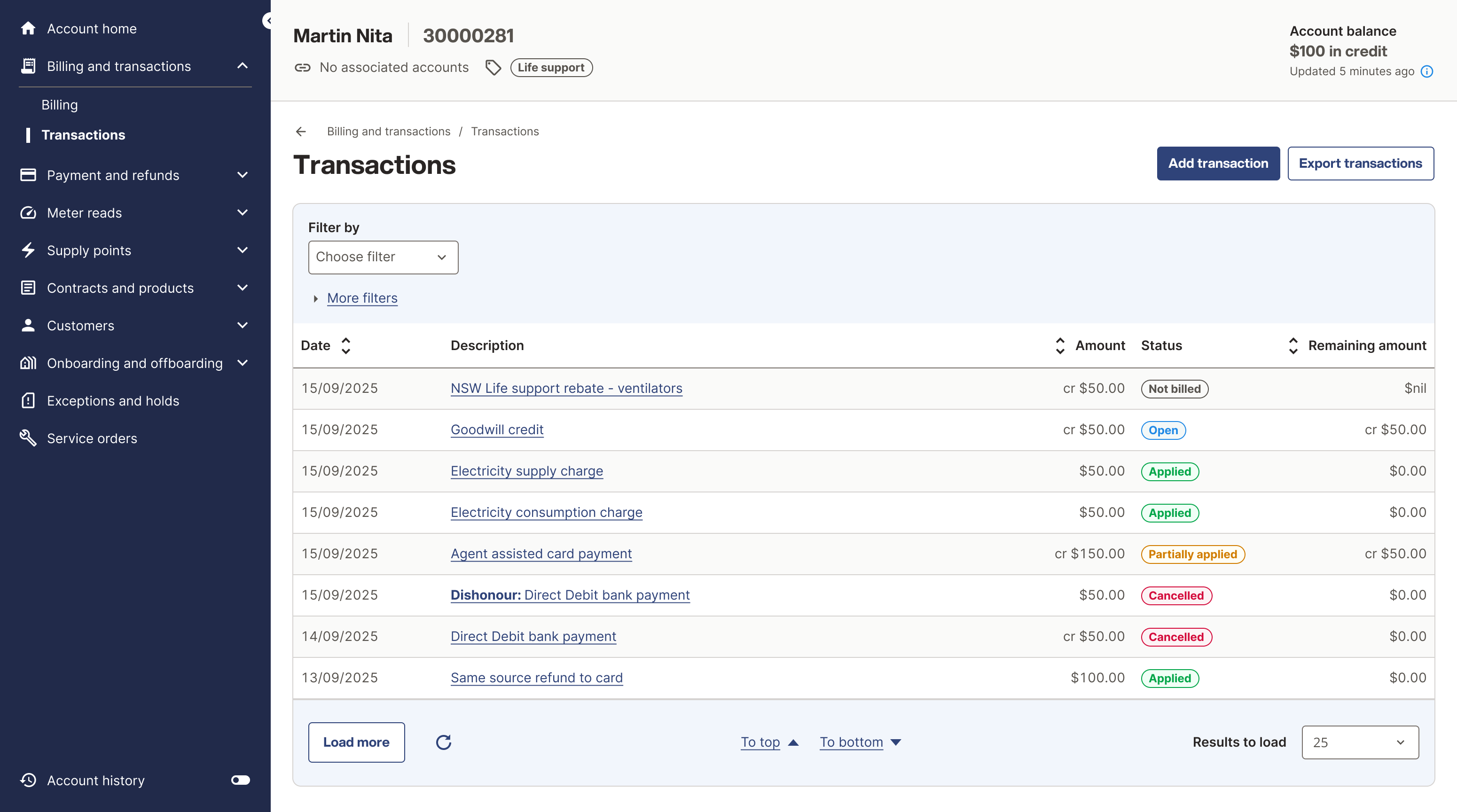
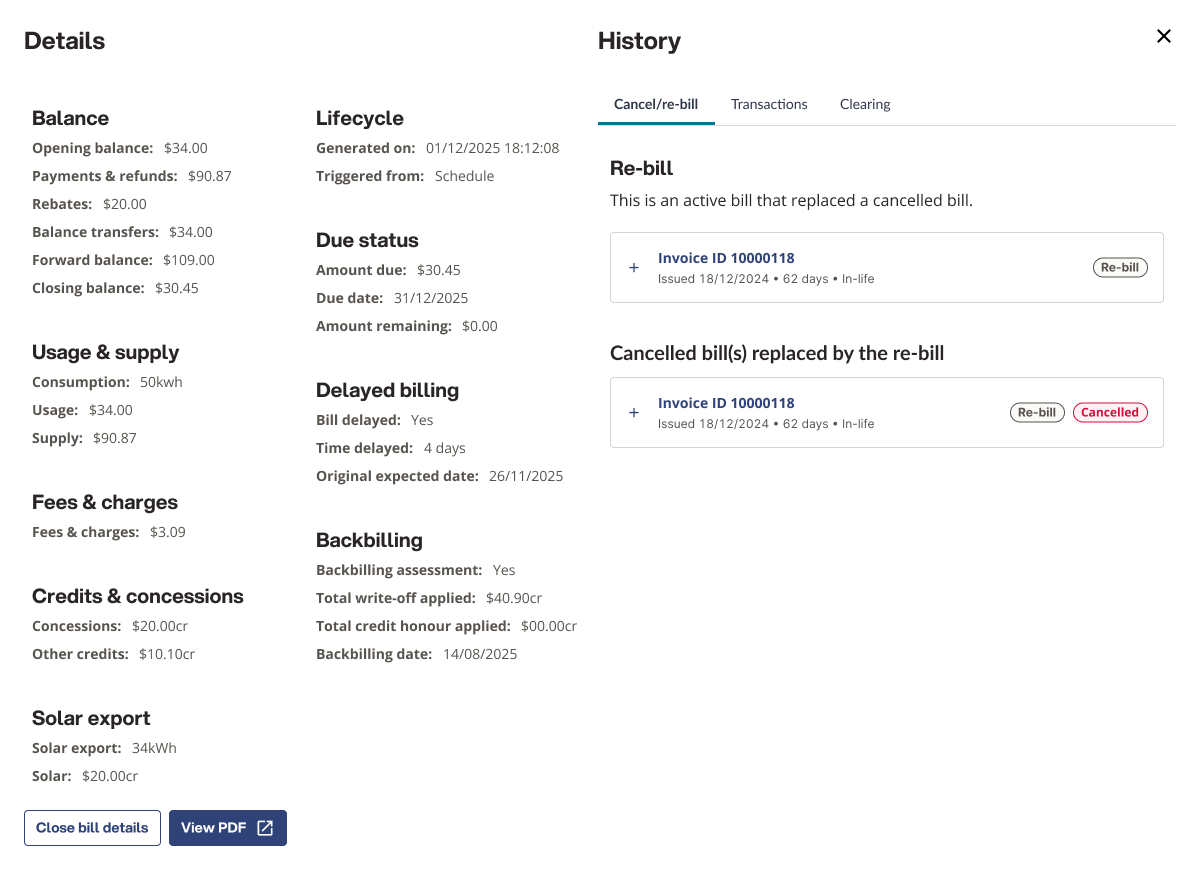
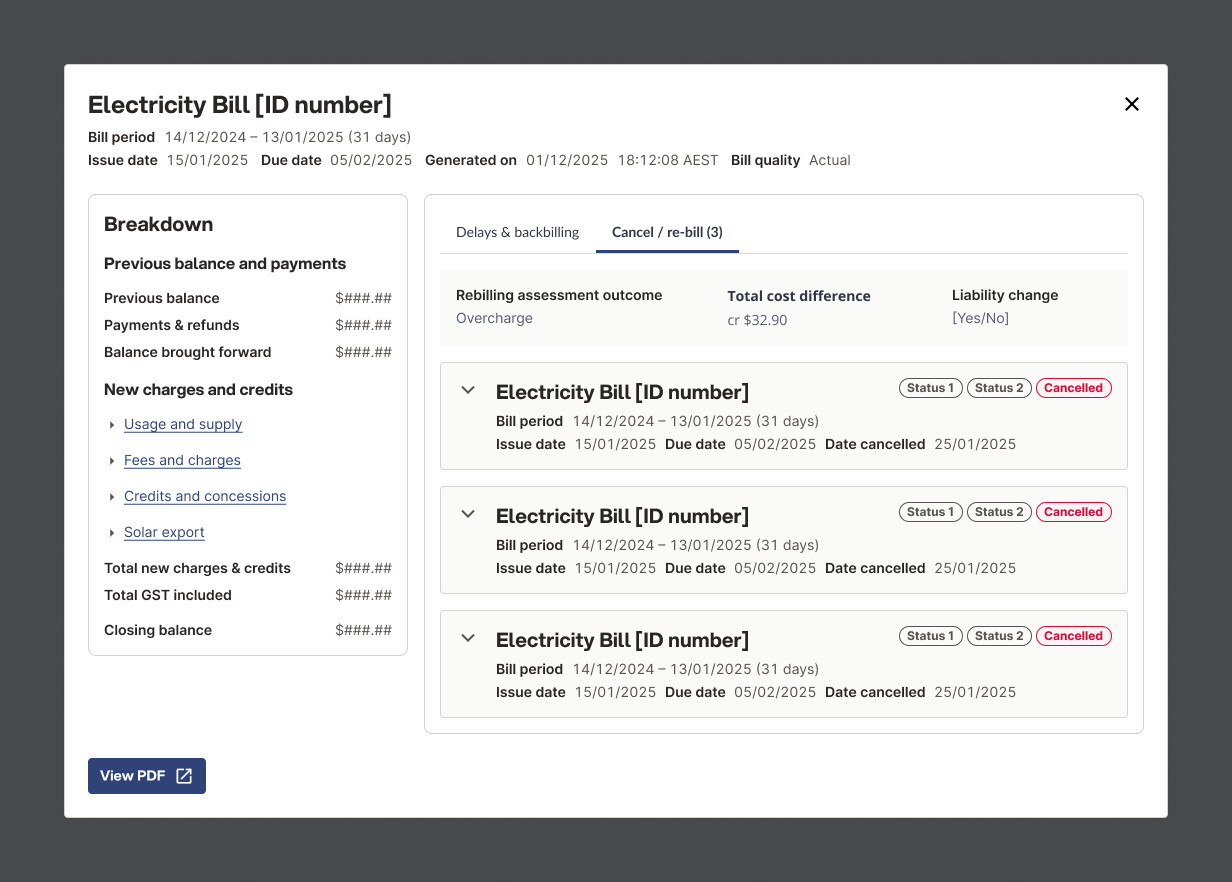
With the playbook, table conventions and weekly crit rhythm in place, the team took a basic Direct Debit form and delivered a considered payments and billing suite — guided payment arrangements, a consolidated hardship dashboard, and a standardised table pattern spanning transactions, billing history and bill detail. My role was enablement: setting the standard, protecting the quality bar in crit, and clearing the path with regulatory and client stakeholders so the team could focus on the work.
The before-and-afters below track that shift — from a single Direct Debit form to guided arrangements and hardship support, and from dense legacy tables to a standardised pattern that handles complex financial data with clear structure and hierarchy.
“I’m doing this without any training — the platform is so intuitive. Every agent will have this cockpit.”Client CIO · live platform demo
Outcomes
04By mid-2026 the work was landing in real releases — 40+ KAE features shipped across the June 2026 client releases, with the foundations in place for the large-scale customer migrations to follow. Much of it reaches customers only as those migrations complete through 2027, after my time at Kaluza ends. What I take from the work is what I could shape while I was there — a team, a set of standards, and a UX quality framework now run as company practice. That, I think, is the honest measure of design leadership.
That framework now runs as company practice — a shared quality bar across accessibility, consistency and usability, feeding the Nebula design system the wider org builds against.